How NFTs Are Changing Digital Ownership
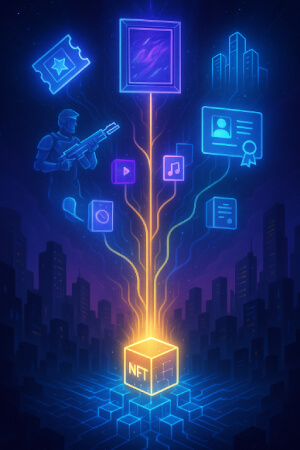
NFTs introduce a new age ownership concept in the digital realm. Digital goods such as images, videos, or virtual items can be multiple copies, thereby placing ownership claims at risk. NFTs, however, record ownership on a blockchain, granting it a transparent, permanent, and tamper-proof ledger.
Such a record finally opens up opportunities in various sectors for:
- Digital Rights Management: Royalties can directly be attached to NFTs so creators can benefit from secondary sales.
- Access and Memberships: Use NFTs as passes for special access to events, content, or services.
- Certificates of Authenticity: One authenticates ownership of, and guarantee the provenance of, assets, both digital and physical.
- Trading and Marketplaces: The buying, selling, and transferring of unique assets.
NFTs in Gaming
Gaming is one of the top practical applications for NFTs. The in-game assets typically belong to the game developer, and the players do not trade them freely. The intervention of NFTs is supposed to create true ownership of these items, whether they are skins, weapons, characters, or land plots.
Players are now able to buy, sell, or trade NFT assets across different games and platforms. This, therefore, creates a digital economy where real-world value is associated with these items. More importantly, these NFTs can open new gameplay experiences, i.e., owning a particular NFT might allow one access to certain special missions, events, or particular in-game communities. By integrating NFTs, game developers will start to receive an ongoing revenue stream based on royalties from all secondary market sales, thus generating sustainable ecosystems mutually beneficial to players and creators.
Memberships and Loyalty Programs
NFTs are increasingly being used for memberships, subscription access, and loyalty programs. Unlike traditional membership cards, NFTs are unique and verifiable, thereby reducing the possibility of fraud. Organizations can issue NFT-based passes granting access to exclusive events, content, or benefits, while flexibility and portability of memberships get improved.
The NFT can also pay off long-term customers. Brands can issue limited edition NFTs that grant rewards, experiences, or discounts. Since NFTs are tradeable, members may transfer or sell them, creating liquidity for loyalty programs and encouraging engagement.
Ticketing and Event Access
Another industry that benefits from this NFT magic is ticketing. Tickets for an event are highly susceptible to fraud and scalping, but buying them with an NFT is a blockchain-based solution. Every NFT ticket is unique, verifiable, and traceable to its owner, making counterfeiting very hard.
Beyond entry, NFT tickets may also carry other benefits. For example, NFT tickets could include digital memorabilia, VIP access, or post-event content. Organizers can ensure that a percentage of royalties on secondary sales will be paid to them automatically, giving them control over pricing and distribution.
Real Estate and Virtual Land
Besides entertainment, NFTs shape both the virtual and physical land industry. In the allied virtual world, NFTs represent ownership over digital land, buildings, or other assets. Platforms such as Decentraland and The Sandbox allow users to purchase and develop and monetize virtual land as NFTs.
In the physical world, it is presently the trend to register land and real estate using NFTs. Consequently, it becomes possible to employ digital tokens to represent a vintage form of ownership, fractional ownership, speedy transactions, and smooth transfer. This translates to newer avenues of investment while filling the gap that has traditionally been occupied by middlemen such as brokers or banks. Smart contracts attached to these NFTs can then autonomously manage rental contracts, deed transfers, or revenue splits.
Identity and Credentials
The world is also seeing the possibility of identity and credential NFTs. Digital identity NFTs can store personal information while allowing access to services or confirming credentials. For example, universities can issue diplomas in the form of NFTs, while professionals may hold certified NFTs that authenticate their qualifications. Because NFTs cannot be intervened with, they are an improved and more portable choice than traditional paper documentation.
This concept extends to privacy systems. Users can share NFT credentials selectively without exposing further personal data. By supplying a verifiable and secure digital identity, NFTs could make for smooth interaction among online services, government systems, and professional networks.
Advantages of NFTs Beyond Speculation
These are just a few of the potential uses and cool things that can be done with an NFT. Sadly, because of their mass hype, the market really only ever considers their speculative matter. The core benefits are transparency, verifiability, and interoperability.
NFTs guarantee a clear record of ownership and transaction history so that anybody may have verifiable proof of the work's provenance-This is mostly helpful in art, gaming, and real estate. The verifiability validates ownership and staves off any potential for fraud or disputes. Interoperability across platforms and marketplaces gives that using NFTs in multiple realms an added layer of flexibility and longevity as digital assets.
Enabling New Business Models
NFTs bring about new business models that were once impossible. Subscription models could be made contingent on NFT ownership-a dynamic form of access that may now be traded. This enabled artists, programmers, and brand owners to have a say in royalties automatically and hence keep earning them without having the need for intermediaries. On the other hand, companies may choose to gamify experiences by providing NFTs as rewards or incentives that encourage engagement and loyalty in a quantifiable, verifiable way.
Enhancing Community and Engagement
NFTs are instrumental in community-building. Ownership is used as a credential of membership that allows access into exclusive arenas, parties, or content. Communities develop around NFT projects, creating social webs independent of the asset. By linking a digital experience to a certified ownership, NFTs create engagement, trust, and the feeling of "ownership."
Challenges and Considerations
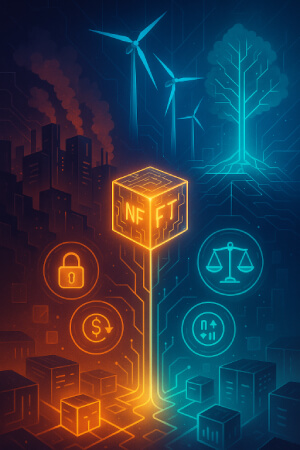
Although the offerings are plenty, certain considerations should be weighed. Environmental degradation due to power consumption is one consideration, with newer proof-of-stake networks being less problematic from this perspective. Another is the uncertainty regarding legislation; the legal treatment of NFTs, particularly within financial contexts, varies greatly from one jurisdiction to another.
Security is also important. NFT ownership depends on private keys, and loss or theft of these keys might mean the permanent loss of assets. Users should-be encouraged to employ effective security practices to safeguard their holdings. Liquidity also differs: some NFTs are easier to trade, whereas others might have difficulty finding offers in accordance with demand and market activity.
Environmental and Technical Factors
The energy footprint of blockchain networks is indeed much-debated. Traditional proof-of-work networks consume considerable amounts of electricity, while proof-of-stake and other energy-efficient mechanisms curb the environmental costs. Developers and companies should consider what blockchain aligns with sustainability goals.
Technical standards like ERC-721 and ERC-1155 ensure that compatibility is maintained across marketplaces and platforms. While choosing a proper standard, it determines the functionality and also affects the interoperability as well as the use cases of NFTs. Companies looking to use NFTs should be aware of these technicalities if they want NFTs to have a maximum impact on utility and not pose a constraint in their use.
The Future of NFT Utility
The world of NFTs ends any cinema before other conventional works of art. As technologies mature, we may see NFT-based digital identities, or perhaps the genesis of decentralized finance and tokenized economies. Industries such as healthcare, education, real estate, and logistics, where verifiable digital records are cardinal, may see an enormous scale of adoption.
Connecting interoperable NFT ecosystems will result in seamless digital experiences, allowing assets and credentials to move freely across platforms. For businesses, deep knowledge of NFT utility means recognizing new profit trends, increasing customer engagement, and innovating in digital services. Individuals know, through NFTs, that they have control and ownership, and an opportunity to get involved in emerging digital economies.
Integration with Other Technologies
NFTs complement other blockchain technologies such as decentralised finance (DeFi) and smart contracts. While integrating NFTs with DeFi opens lending, staking, and fractional ownership models, those in the IoT and supply chain algorithms allow for tracing and accountability, with NFTs standing for physical items or their parts.
Artificial intelligence (AI) also opens up innumerable creative options for interfacing with NFTs. AI-generated content can be tokenized as NFTs, giving creators verifiable ownership and the opportunity for monetization. NFTs, combined with AI and blockchain automation, open entirely new avenues for business models that were until now not practical.
Some of the core uses are:
- DeFi-NFT integration: For lending, staking, and fractional ownership of assets.
- IoT and supply chain: Track physical items and ensure their authenticity.
- AI and digital creation: Tokenize AI-generated content and automate royalties.
NFTs in Commerce and Enterprise Applications
Beyond gaming, ticketing, and real estate, NFTs are increasingly used in commerce and enterprise to streamline operations, improve transparency, and create new revenue opportunities. Businesses are exploring NFTs to represent digital products, supply chain assets, and even loyalty rewards, allowing for secure ownership and efficient transfer across platforms. By integrating NFTs into enterprise workflows, organizations can enhance accountability, reduce fraud, and deliver unique customer experiences.
Key practical applications include:
- Digital Products and Licensing: Companies can tokenize software, digital content, or media assets as NFTs, providing verifiable proof of ownership and licensing rights.
- Supply Chain and Inventory Management: NFTs track products from manufacture to delivery, ensuring authenticity and minimizing counterfeiting.
- Corporate Rewards and Incentives: Businesses can issue NFT-based rewards or perks that employees or customers can redeem, trade, or transfer, increasing engagement and loyalty.
Gaming, Tickets, Real Estate, and More
NFTs ceased existing in the art market just some years ago. Their function includes gaming, memberships, ticketing, realty, or identity systems to provide ownership, security, and ease of transfer. They allow for newer business models, increased community engagement, and in turn, a path toward industry innovation. There are still challenges such as the environmental impact, security, and legal issues, yet NFTs remain responsible for their line of work as digital assets.
Understanding the NFT utility provides an understanding of how businesses can use blockchain technology to improve experiences, support revenue opportunities, and provide truly tradeable, secure digital assets. Individuals find it beneficial when it comes to true ownership of assets, verifiable credentials, and unique access to new and emerging services. An NFT forms an evolving and expanding layer of the digital economy, with technologies far operating Trades for its original purpose of art and collectibles.
Learn More
TOP #NFT PROJECTS BY SOCIAL ACTIVITY$LINK $ICP $PENGU $APE $XTZ $GALA $FET $SUSHI $ROSE $RARE pic.twitter.com/dnicQSrWHX
— PHOENIX - Crypto News & Analytics (@pnxgrp) November 9, 2025
I think no one’s touching grass lately, Wallchain community still grinding hard.@spaace_io just claimed Top 1 on global mindshare.
— MBE (@mbexbt) November 9, 2025
Thought NFTs were dead… or is NFT szn coming back soon? 🧑🍳 pic.twitter.com/3qWjlj9ZIK
With the kind support: