Choosing the Right Blockchain for Your NFT
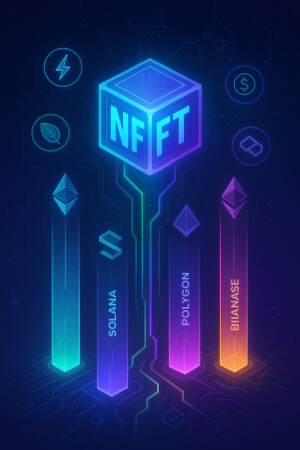
Choosing a blockchain to mint an NFT is one of the first and most critical decisions when creating an NFT. The blockchain determines how your NFT is stored, including transaction speeds, fees, and marketplace compatibility. Most NFTs appear to be minted on one of four: Ethereum, Solana, Polygon, or Binance Smart Chain. Each of them has its pros and cons.
With the most notable number of NFTs, Ethereum enjoys the topmost visibility yet may charge highly exorbitant gas fees. Solana and Polygon, on the other hand, would charge less and transact faster but will have a sketchier marketplace for trade upon. The decision, therefore, on where to mint an NFT should cater to target audiences, budget, and long-term goals.
Popular Blockchains
Ethereum remains the industry standard, renowned for its infrastructure, community support, and application scenario; it supports the token standards ERC-721 and ERC-1155, which define how NFTs operate on the blockchain. Because Solana and Polygon use different token standards than those on Ethereum, they can offer much faster and cheaper transactions, making them attractive to newer creators or projects with extremely high-volume activity.
By some accounts, certain blockchains stand for energy efficiency and sustainability. These are Tezos and Flow and may well win the votes of creators and collectors with environmental leanings. Your choice should also entail compromises in tech requirements, community size, marketplace accessibility, and cost.
Security and Compliance Considerations
Security is the key factor in blockchain selection. Look into blockchains with proven track records, low chance of being hacked, and active developer communities. Also, check for compliance with regulations. Some platforms offer tools to verify NFT authenticity and check ownership history, thereby protecting either party in case of a dispute.
Minting Your NFT
Preparing Your Digital Asset
Before start creating the NFT, be sure your digital asset is fully completed. Whether an image in high resolution, duly formatted audio or video files, or correct metadata, all contribute to a well-done NFT. The metadata might include aspects like title, description, properties, and unlockable content, which could be an access key to the high-resolution file or high-level content.
Transparent metadata can enhance the discoverability of the artwork in the marketplace and crystalize its value for prospective buyers. Many NFT platforms allow for optional features such as unlockable content or royalties which could potentially affect their future earnings.
Step-by-Step Minting Process
- Connect your Wallet: Through a secure method, connect to your wallet, such as MetaMask, Phantom, or Trust Wallet, with the blockchain you choose.
- Upload the Asset: Select your digital file and upload it to the NFT platform.
- Add Metadata: Here, depending on your art, fill in title, description, attributes, and any unlockable content.
- Choose Token Standards: On Ethereum, choose a token if your file will be single-edition (ERC-721) or multiple editions (ERC-1155).
- Minting the NFT should involve paying a gas fee (if applicable) and transaction confirmation. After it's minted, your NFT is officially on the blockchain and may be put up for sale.
Minting platforms often have tutorial-type templates for first-time users. Always do your due diligence one final time before confirming the minting transaction, as anything etched on a blockchain is etched for life.
Listing NFTs on Marketplaces
Once minted, they can be sold or auctioned on digital marketplaces. These marketplaces bring creators and buyers together and often conduct sales and distribute royalties on their own. Some of the popular marketplaces are OpenSea, Rarible, Magic Eden, and Foundation.
Fixed Price vs. Auction
Creations can be listed for sales either fixed price of auction purposes. Fixed-price sales are simpler way of doing business but might limit exposure to buyers willing to pay more so much demand. In an auction, there is a bidding war between buyers so potentially sellers might earn a lot more, but such mechanisms do require promotion and therefore time.
Choosing the Right Marketplace
The choice of marketplace depends on your blockchain, audience, and type of NFT. OpenSea and Rarible are common choices for Ether-based digital goods, whereas Magic Eden is a standard selling platform for Solana NFTs. Any marketplace you choose has its own fees, policies, and cultural norms, so be sure to familiarize yourself with these before listing.
Optimizing Your Listing
A successful listing for an NFT gives context and is appealing. Include an attractive description, tags, and good visuals. To give an edge, creators sometimes add their background stories, work processes, or ideas for future utilities. Being clear about ownership, rights, and royalties proves to buyers that they can trust you.
Understanding Royalties and Earnings
Royalties are the ways for creators to get paid for percentage of every secondary sale of their NFT. Oftentimes, it is automatic on the marketplace, thus providing the creator with income even after the first sale is done. Obtaining knowledge of how royalties really get paid might be vital for one's long-term earnings.
Setting Royalty Rates
The royalty levels generally range from 5%-15% on individual secondary sales. Set a rate characterization that maximizes your earnings potential yet remains market-competitive. Note that certain marketplaces will enforce a cap to royalty rates, and rates may actually differ from one blockchain to another.
Taxes and Accounting
Minting, creating, trading, auctioning, selling, or buying NFTs in various jurisdictions may attract tax implications. Maintain rigorous records of purchases, sales, gas fees, and royalties. Hire an accountant or tax professional specializing in the field of digital assets for help with compliance and optimization of reporting.
Buying and Trading NFTs
Trading NFTs offers opportunity to collectors and investors past its artists and designers. Buyers must equip themselves with knowledge of valuation processes, authenticity, and liquidity before engaging in any secondary NFT auctions.
Evaluating NFTs
The NFT value depends on rarity, utility, creator reputation, and demand. Search for previous sales, check for the creator's history or portfolio to appraise, and query the blockchain to check for authenticity. Unlike usual collectibles, NFTs are easy to transfer but possibly exposed to market risk.
Marketplace Navigation
Most marketplaces make it possible to browse by category, filter by price, and follow the trending collections. Your account's security is crucial: two-factor authentication, and avoid phishing, keep your private keys private. You might want to make small purchases to gain confidence with the trading ecosystem.
Trading Strategies
Collectors are buying and selling NFTs for profit, gaining entry into exclusive communities, or supporting an artist-creator they admire. Some consider themselves flippers and rely on the strategy of "buy low, sell high." Others, however, are more interested in holding for long-term appreciation or access to future utility. If you are aware of market trends, community interaction, and updates from the creators, such knowledge will enable you to consider relevant factors regarding the success of your trades.
NFT Utilities and Beyond
As technology evolves, the community is beginning to appreciate NFTs not only for their collectibility but also for their utility. Several offer memberships, digital event tickets, or in-game bonuses. Others have an identity verification function or facilitate experience creation in the virtual world. Being aware of these potential utilities is an advantage for better buying and selling.
NFTs can serve as digital passes for clubs, events, and content platforms. The buyers get access to exclusive benefits, while the creators can initiate programs to reward loyalty and community engagement. An NFT focused on utility is generally considered better in the long term since it provides ongoing benefits.
In gaming jargon: NFTs refer to the unique characters, skins, items, or virtual lands. They provide genuine possession and interoperability across platforms so that gamers can trade or sell assets outside the game. This enlarges the domain of NFT into real businesses and virtual economies.
Common Challenges and How to Avoid Them
Being in the creation and trade of NFT means facing several risks, but an act of foresight can help one avoid some. With this understanding of the main challenges, creators and buyers can circumvent some dangerous slippery areas in the marketplace. Creators need to take needed actions to protect their works before putting them on sale in marketplaces. These actions include but are not limited to:
- Watermarking previews of works or document trails of his/her creative process
- Registering intellectual property rights when applicable
- Not uploading content that they do not own
- Examining the marketplace terms to be sure they do not permit unauthorized use of their work
Since NFT prices can fluctuate widely, transactions must be handled with realistic expectations. Market risk management strategies include the following:
- Diversify assets to avoid sudden loss
- Stay updated on trends, creator activities, and community opinions
Technical issues may hamper minting and trading. To maintain minimum disruption:
- Understand the gas fees, wallet compatibility, and blockchain congestion
- If there is any doubt, test a transaction with small amounts
- Keep the software up to date and use the most secure wallet or marketplace available
When combined, these activities can go a long way toward ensuring comfort for each participant in NFT trade.
Your Next Steps in the NFT Journey
The creation and trading of NFTs yield benefits for both creators and collectors. What first needs to be understood fully is the lifecycle of an NFT-adopting-the-blockchain-and-minting-an-NFT-to-listing-and-trading-to-earning-of-royalties. These days, while the market is highly volatile and sometimes highly technical, through a proper amount of planning, research, and security, you can set yourself up nicely to embrace all the good this new technology has to offer.
NFTs are not just digital collectibles; they incorporate ownership, creativity, and new economic possibilities into the digital world. Armed with knowledge and care, the beginners can enter confidently and grow from this shifting environment.
Learn More
TOP #NFT PROJECTS BY SOCIAL ACTIVITY$LINK $ICP $PENGU $APE $XTZ $GALA $FET $SUSHI $ROSE $RARE pic.twitter.com/dnicQSrWHX
— PHOENIX - Crypto News & Analytics (@pnxgrp) November 9, 2025
I think no one’s touching grass lately, Wallchain community still grinding hard.@spaace_io just claimed Top 1 on global mindshare.
— MBE (@mbexbt) November 9, 2025
Thought NFTs were dead… or is NFT szn coming back soon? 🧑🍳 pic.twitter.com/3qWjlj9ZIK
With the kind support: