Evolving NFT Standards

It is the blockchain standard on which NFTs are based that govern the minting, transferring, and interacting with tokens. Ethereum-based ERC-721 created the first way to truly own a token, whereby an NFT can be different and therefore uniquely traceable. Subsequently, ERC-1155 allowed multi-token functionality for a single smart contract to hold multiple fungible and non-fungible assets, thereby enabling reduction of transaction costs and more streamlined operations for platforms such as gaming marketplaces.
Aside from nft generation on Ethereum, Solana and Flow introduced their customized nft standards such as SPL tokens and Cadence contracts to speed the processes and to keep costs low. The future will first witness the convergence of standards across chains, allowing for greater interoperability and incentivizing the very friction that disallows users from moving NFTs across ecosystems. Cross-chain bridges, wrapped NFTs, and multi-chain smart contracts have already begun to lift the veil on a truly interoperable NFT economy.
Technical Upgrades and Layer 2 Solutions
Another core challenge to NFT adoption is scalability. The exorbitant gas fees on Ethereum kept NFTs away from the masses. The layer 2s came in to reduce the cost without compromising on security. Minting and trading faster and on-chain interaction is paramount for gaming, ticketing, and enterprise-grade implementations of NFTs.
While layer 2 rolling up major Ethereum activities and publishing transactions, they leave some pressure on the Ethereum main chain without paying for all the gas costs of validity or fraud proofs necessary to create new blocks. Operating costs while maintaining security is paramount as minting and trading must be done quickly for gaming, ticketing, and very large-scale implementations of NFTs.
Increases in metadata standards, chain storage, as well as verifiable credentials for NFTs, are among the other improvements. These improvements allow toward more resilient NFTs that are wipe-friendly, given against audit, and compliant with emerging regulatory frameworks-theory closing the gap between novel assets and acceptable digital property.
Multi-Chain Standards and Interoperability
NFT adoption is fast becoming multichain-oriented, meaning that assets increasingly have to float freely between blockchains. Multi-chain standards and protocols-a form of cross-chain bridges and wrapped NFTs-allow the seamless portability of assets. This in turn creates liquidity, creates a more user-friendly experience, and ensures that tokens are never forced into the ecosystem.
Interoperability allows gamers, brands, and developers to ensure digital objects, collectibles, and identity credentials work the same way across different platforms. Eventually, these standards may evolve into a universal standard for NFT ownership, thus aiding increased adoption and more industry-relevant use cases.
Enhanced Metadata and On-Chain Storage
From visual traits to ownership history, metadata focuses on defining the key characteristics of an NFT. Emerging solutions suggest on-chain storage of metadata or disseminated storage via networks such as IPFS or Arweave. This grants data ephermalness, transparency, and verify-ability, crucial factors for cases such as digital identities, virtual land, or intellectual copyright laws.
Having lowered the risk of lost or corrupted assets by securing and transparently preserving key NFT information, these good practices promote reliable NFT metadata creation. Reliable metadata enables complex NFTs to obtain functional utilities beyond simple collectibles.
Modular NFT Architecture
Another trend is the one of modular NFT architecture that enables tokens to be composed of multiple layers or components. Modular NFTs may combine the visual art, in-game function, membership access, or even a financial instrument of the token into one and only token. This, in turn, enhances interoperability and hence allows developers to update, better, or combine NFTs without causing incompatibility issues.
On a more practical level, modularity opens up new horizons for the collaborative creation of assets, dynamic NFTs, and programmable assets, further providing versatility to the ecosystem and valorizing responsiveness to the need of users and markets.
Future Standards and Governance
Governance of standards will become the very center of attention by the time NFT adoption matures. DAOs and industry consortia are currently brainstorming collaborative approaches to managing standards so that NFTs remain interoperable, secure, and fair. Governance frameworks might include versioning standards, community processes for review, and an enforcement mechanism for best environmental and security practices.
This would keep innovation in check with stability, assuring creators, collectors, and enterprises that the NFT infrastructure would work toward real long-term growth and utility.
Cross-Chain NFTs and Interoperability
Interoperability becomes increasingly important as NFTs move beyond a single blockchain. Cross-chain NFT solutions facilitate assets from flowing seamlessly between ecosystems, hence increasing liquidity and usage possibilities. This may lead to emerging marketplaces, gaming items working across titles, and digital identity recognition at a universal level.
Cross-chain standard exploration may be dependent on wrapped tokens, atomic swaps, or shared smart contract protocols. However, after the stage of advanced development, one may forfeit the memory of querying the provenance regarding the blockchain from where an NFT came. A decentralized network of networks is destined for realization, where NFTs will be portable, composable, and integrated across multi-platforms, much like physical assets in the real world.
Sustainability and Environmental Considerations
Environmentalists have been condemning NFTs for their mineforce of nature, especially when forged over proof-of-work blockchain such as Ethereum before it shifted to proof-of-stake. Long-winded critics claim that these energy-wasting operations go against the movements that advocate global sustainability, whereas proponents emphasize offsets, layer 2 solutions, and low-impact chains as remedies.
The eventual importance of NFTs will be placed on green minting, carbon offset initiatives, and transparent declarations of carbon energy used. Now, from marketplaces to artists, everyone within the industry is embracing and promoting green NFTs and blockchain protocols that are streamlined in terms of energy consumption. This change will be a plus for mainstream acceptance as sustainability takes center stage beside functionality and aesthetics for consumers and brands.
Regulatory Outlook
Governments and regulatory bodies have slowly started to put their policies on NFTs into place. In the backdrop, scenery NFTs are considered digital assets or property; however, their interface with securities law, intellectual property law, and taxation adds many shades of complexity. For example, in the U. S. the SEC is looking at those tokenized assets that may in any manner provide the returns on investments, while the IRS looks into how taxable events arising from sales and trades of NFTs are reported.
Future laws might provide the NFT ownership rights, transfer formalities, and consumer-protection laws more clearly. Compliance frameworks might standardize the enforcement of royalties, anti-laundering checks, and data-privacy safeguards. This could, of course, put a little brake on the speculative side of things but turn an environment into one that is safer for mainstream adoption and institutional activity.
NFTs in Gaming
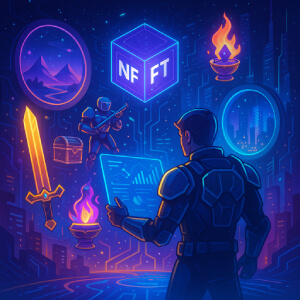
Gaming has been one of the most booming sectors for NFTs. In-game objects, characters, and even virtual properties can be tokenized, giving players true ownership and a means to trade assets outside the game ecosystem. The
Going forward, the interaction between NFTs, AR, and VR could render immersive metaverse experiences. Gamers may own assets that can be shared across multiple games or virtual worlds. On the flip side, developers track asset provenance and enforce scarce, elevating them in both economic and creative terms.
Brand Adoption and Mainstream Use
Today, major brands are attempting to utilize NFTs for customer engagement, loyalty, and digital trade. Fashion brands, sports franchises, and entertainment companies are trying tokenized merchandise, replicating limited-edition collectibles and perks for members. NFTs can also be used for proving authenticity, hence resisting counterfeiting in luxury and collectible industries.
In the coming years, access to exclusive experiences, virtual events, and community-oriented platforms can be passed around by way of digital passports using NFTs. They could change the way consumers interact between the mix of physical and digital ownership as companies adopt NFTs more seriously within their strategic marketing position.
NFTs and Web3 Identity
Beyond collectibles and commerce, NFTs are getting more and more linked to digital identity. Tokenized credentials may signify anything from membership in an association, professional qualifications, certification, or ownership of data. These NFTs provide a verifiable, portable, and privacy-friendly alternative to traditional identity systems.
Under special circumstances, we may see NFTs supporting reputation systems, social graphs, and decentralized autonomous organizations (DAOs). Users would able to select what specific pieces of proof they're willing to reveal as their identity without giving away other personal information, putting these three dimensions in equilibrium: verification, privacy, and control on personal data.
Challenges and Market Dynamics
Though the future shines for NFTs, hurdles remain. Market volatility, speculative behaviors, conflicts over intellectual property, and technical complexities may serve as inhibitors to adoption. Security threats, such as phishing, wallet theft, and smart contract vulnerabilities, should be under constant vigilance.
Yet the state of industry maturity is currently attempting to tackle certain issues with insurance protocols, safe marketplaces, audits, and community governance models. As soon as the market becomes stable, NFTs will be considered useful and interoperable digital assets attached to everyday life, unlike the hype-driven collectibles.
The Road Ahead
NFTs are moving away from being novelties to become multipurpose digital assets with practical applications in gaming, brands, identity, and finance. Their adoption trajectory will be shaped by technical innovations, and cross-chain solutions, sustainability practices, and regulatory clarity. By working down front-line issues to create a clearly defined set of standards, NFTs could then be fundamental elements for Web3 and the more significant digital economy.
Interoperability would likely be placed first, with next being energy efficiency, consumer protection, mainstream utility. As businesses, developers, and communities consider new implementable use cases, NFTs will continue to evolve from being definitions of ownership and engagement into that of digital value.
NFTs Are Here to Stay
NFTs are no longer just for digital art or speculative trading. The future is in use cases, interoperability, sustainability, and regulated adoption. Changing technical standards, cross-chain solutions, and NFT integration with gaming, brands, and digital identity point toward NFTs becoming a mainstream element of our daily lives. Laying the foundation of practical use and responsible growth will give the ecosystem supporting NFTs the greatest chance of staying viable and relevant.
Learn More
TOP #NFT PROJECTS BY SOCIAL ACTIVITY$LINK $ICP $PENGU $APE $XTZ $GALA $FET $SUSHI $ROSE $RARE pic.twitter.com/dnicQSrWHX
— PHOENIX - Crypto News & Analytics (@pnxgrp) November 9, 2025
I think no one’s touching grass lately, Wallchain community still grinding hard.@spaace_io just claimed Top 1 on global mindshare.
— MBE (@mbexbt) November 9, 2025
Thought NFTs were dead… or is NFT szn coming back soon? 🧑🍳 pic.twitter.com/3qWjlj9ZIK
With the kind support: